When you are missing teeth, it has an impact on more than just your smile. These affect not only your diet, but also your speech and self-esteem. These, over time, cause the other teeth you have to move and make your jaw bones deteriorate. The good news? Today’s dentures are far from the original ones. Today’s options are more comfortable, more natural-looking, and more varied than ever. This guide covers every material and every cost — so you’ll walk away knowing exactly what to ask your dentist and what to expect at every step.
What Are Dentures and Who Actually Needs Them?
Dentures are designed to replace missing teeth. They stay in the mouth on your gums and are held in place by your soft tissue, natural teeth, or dental implants. They improve your eating, speaking, and smiling abilities.
Dentures may be necessary if you have several severely decayed or broken teeth, you have advanced gum disease, several planned extractions, or teeth that are already loose or moving. Dental professionals strongly recommend replacing missing teeth as soon as possible. Left untreated, gaps will lead to bone loss in the jaw, which changes the face shape and can make future treatment more difficult.
Contemporary dentures are NOT the big, bulky, ill-fitting dentures of the past. Thanks to digital scanning, quality materials, and craftsmanship from dental labs, most patients can have a comfortable, fully natural-looking denture.
The 5 Main Types of Dentures Explained
The first step in deciding on the type of dentures desired is to learn what they are.
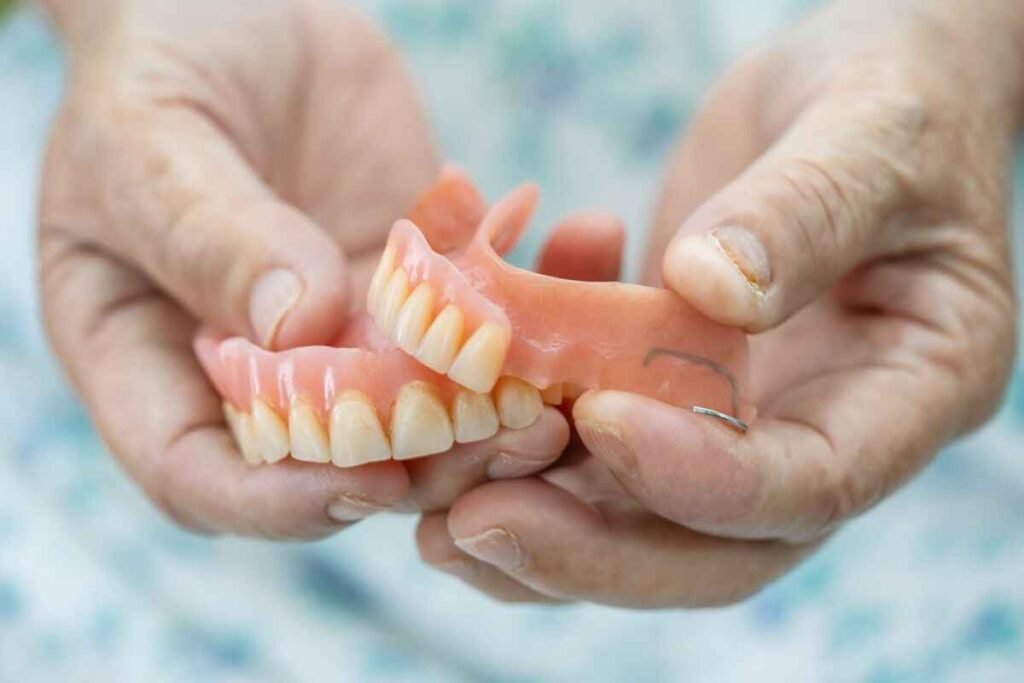
Full (complete) dentures are those that are used to replace an entire arch of teeth (top, bottom, or both). These are placed directly on the gums and custom-made to fit your mouth. The denture is stabilised by suction in the upper denture. It is more difficult to stabilise a lower denture, as there is no suction from the palate.
If some natural teeth remain, partial dentures will be used. These are glued to existing teeth with metal or acrylic brackets and provide support to fill in gaps created by missing teeth. They can also stop the other teeth that might remain from drifting.
The most popular are thermoplastic nylon (Valplast) dentures, which are flexible. They are light, move with your mouth, and do not have metal clasps but gum coloured clasps. This renders them a lot less perceived than classic partials.
The ones that are inserted the same day as the tooth extraction are called immediate dentures. After exiting the clinic, you’ll leave with a set of teeth! Gums heal and contract over the next few months, which alters the fit. Almost always, the liner will need to be replaced in the first year. They can be likened to a temporary solution in the meantime until normal dentures are fabricated.
Implant-supported dentures (overdentures) offer the greatest stability of any removable option. Two to four implants are placed into the jawbone per arch, and your denture simply snaps onto them using ball or bar attachments. That means no more slipping, no messy adhesives, and better long-term jaw health, too. You can still take them out for cleaning, but during the day, they stay firmly locked in place.
Full vs Partial Dentures — Which Is Right for You?
Of course, no one denture type is right for all people. Several personal factors need to occur for the right person to make the right choice.
Begin by stating the number of missing teeth. If you have 1-3 missing teeth, you are a good candidate for a partial denture or bridge. Fewer than 4 missing teeth are good for a flexible partial or implant-supported. If there are no teeth in both the upper and lower arch, then complete dentures or All-on-4 are indicated.
Keeping your natural teeth as long as possible is always worth doing. They provide better support for a partial denture than gums alone provide for a full one. If your remaining teeth are healthy, a well-made partial denture will almost always outperform a full denture in terms of fit, stability, and comfort.

Denture Materials — What Makes the Difference
The material that your denture is fabricated from can impact its endurance, look, and comfort. The dentures of today have made fantastic advances in the UK.
The most commonly used material is standard acrylic (PMMA). Low cost, simple to modify, and offered on the NHS. It does wear out, though, more quickly than high-quality choices. The gold standard for partial dentures is chrome cobalt metal frameworks that are strong, thin, and long-lasting. Suitable for use with patients who require discretion and comfort and do not wish to wear metal clasps, thermoplastic nylon (Valplast) is the ideal material to use.
Porcelain teeth are more natural in appearance, are more stain-resistant than acrylic, and are heavier, but can wear down opposing natural teeth over time.
Top brands like Ivoclar Vivadent use advanced acrylic and precision manufacturing to create dentures that look and feel incredibly natural. You’ll find them at private dental clinics across the UK — and they’re widely regarded as some of the best you can get.
How to Choose the Best Dentures for Your Situation?
Of course, no one denture type is right for all people. Several personal factors need to occur for the right person to make the right choice.
Begin by stating the number of missing teeth. If you have 1-3 missing teeth, you are a good candidate for a partial denture or bridge. Fewer than 4 missing teeth are good for a flexible partial or implant-supported. If there are no teeth in both the upper and lower arch, then complete dentures or All-on-4 are indicated.
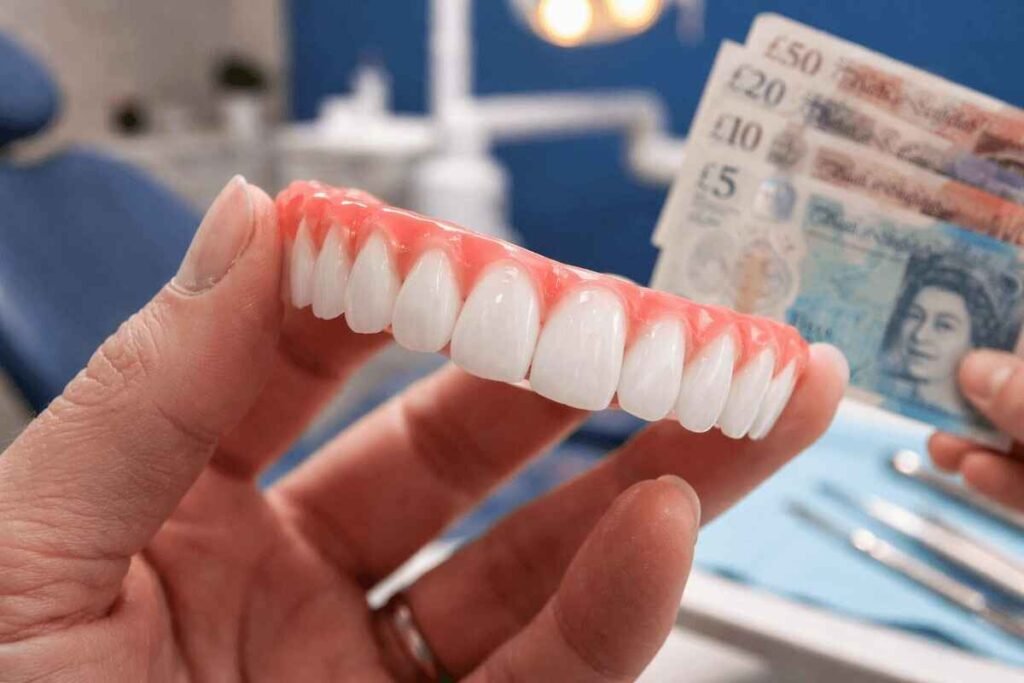
Then think realistically about your spending. The basic cost of economy conventional dentures is about £300 per arch. The cost of premium acrylic or flexible partials is £1,000 – £2,500. The price of implant-supported or All on 4 options begins at £5,000 per arch and increases from there.
What to Expect: Getting Your Dentures Step by Step
Getting dentures is easier than you might think — just a handful of simple appointments and you’re on your way to a new smile. Your dentist starts with a full oral exam, checking your remaining teeth, gums, and jawbone, then takes a mold and impression of your mouth. If any teeth need to be removed first, you’ll have a few weeks to heal before the fitting begins.
Next comes the fun part — your try-in appointment! You’ll get to see a wax model of your new denture and check how it looks and feels before anything is finalised. Once your denture is ready, a little soreness in the first few weeks is completely normal and easily sorted at a quick follow-up visit.
As time goes on, your gums will naturally change shape, so a reline every 2–3 years keeps everything fitting comfortably. Most dentures are fully replaced every 5–8 years.
Caring for Your Dentures — Daily Habits That Make Them Last
Proper maintenance can cause your dentures to last a long time. Take them out at night and put them in water or a denture-cleaning solution. Do not use hot water – it will deform the shape. Gently clean with a soft brush and a no-abrasive cleaner every day. Daily toothpaste is not sufficient and will scratch the surface.
Brush and floss natural teeth well daily if wearing partial dentures. Food and bacteria accumulate under clasps. Skip this step, and your partial denture could start putting too much strain on the teeth holding it in place — and over time, that can actually cause you to lose those teeth too.
Get regular check-ups even if you don’t feel any symptoms. They will examine your gums, evaluate the fit, and catch issues early. Any of the following is an indication that it is time to reline or replace: clicking, sore spots that do not go away, or a loose fit.
Conclusion — Finding Your Best Fit
The best dentures are the ones that are a direct match to your dental health, lifestyle, and budget – not the most expensive and not the least expensive available. Dentures are appropriate for people who are missing all of their teeth. If you still have some of your natural teeth but want a denture that nobody can spot, flexible dentures like Valplast partials might be exactly what you’re looking for — comfortable, discreet, and designed to blend right in. Patients who require the greatest stability and are willing to put the time in will benefit from implant-supported solutions.